***WARNING: this article contains very graphic material that is not intended to be viewed by children. Some adults may be offended by it, as well. Viewer discretion is advised.***
It is often said that a "Plastibell" circumcision is painless and doesn't involve any cutting or blood. Many people say that it is a more "gentle" circumcision without any risks. All of these statements are false. No circumcision is painless. The foreskin contains thousands of concentrated, specialized nerve endings. It is the most sensitive part of the penis. Any cutting on this part of the body is extremely painful, even with anesthetic (which will never provide 100% pain relief).
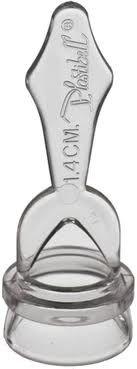
All circumcisions involve cutting, tearing and blood (even Plastibell methods). From birth, the foreskin is fused to the head of the penis (like a fingernail is fused to a finger). Before any circumcision begins, the foreskin must be ripped away from the glans. With a Plastibell circumcision, typically the foreskin is slit down the top to allow the insertion of the Plastibell. When in place, a string is tightly tied to necrotize the foreskin. After everything is secured, the excess skin is removed with scalpel or scissors.
A video of a Plastibell infant circumcision can be seen below:
It is often said that a "Plastibell" circumcision is painless and doesn't involve any cutting or blood. Many people say that it is a more "gentle" circumcision without any risks. All of these statements are false. No circumcision is painless. The foreskin contains thousands of concentrated, specialized nerve endings. It is the most sensitive part of the penis. Any cutting on this part of the body is extremely painful, even with anesthetic (which will never provide 100% pain relief).
All circumcisions involve cutting, tearing and blood (even Plastibell methods). From birth, the foreskin is fused to the head of the penis (like a fingernail is fused to a finger). Before any circumcision begins, the foreskin must be ripped away from the glans. With a Plastibell circumcision, typically the foreskin is slit down the top to allow the insertion of the Plastibell. When in place, a string is tightly tied to necrotize the foreskin. After everything is secured, the excess skin is removed with scalpel or scissors.
A video of a Plastibell infant circumcision can be seen below:
The Plastibell procedure also has many dangers. It is not "safer" or "without risk". In fact, there are studies surrounding the complications of this method. Below are some photos involving just a few complications from Plastibell circumcisions:
(WARNING: these photos are very graphic and not intended to be viewed by children. Some adults may be offended by them. Viewer discretion is advised.)
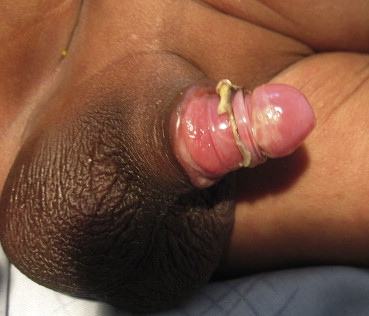 | 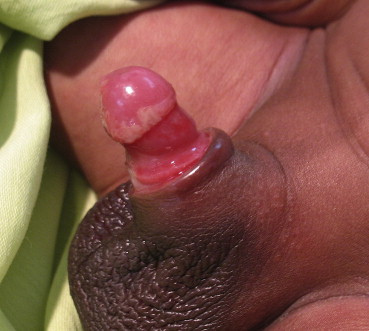 |
(Above) Plastibell ring which has migrated proximally onto the penile shaft 8 days after circumcision. Patient experienced extensive skin loss over penile shaft. Read more about this story here.
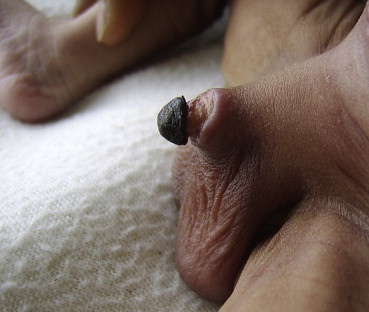
Partial necrosis of glans penis seen on 13th day post-circumcision with Plastibell device.
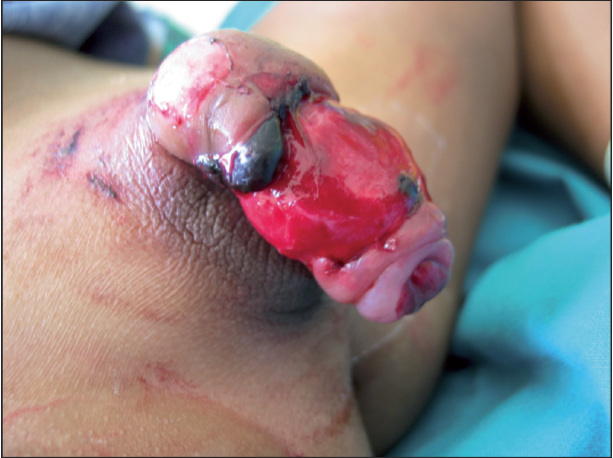
Post-Plastibell separation and bleeding from a too-small fit that caused tissue strangulation and necrosis.
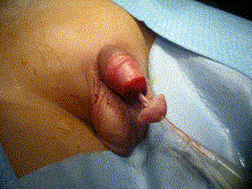 | 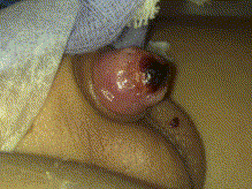 |
We present the case of a 4-year-old boy who, shortly after a Plastibell circumcision, with the ring still in situ, experienced trauma to his glans, resulting in complete amputation. The second photo shows removal of dressing 7 days post injury. Read more about this story here.
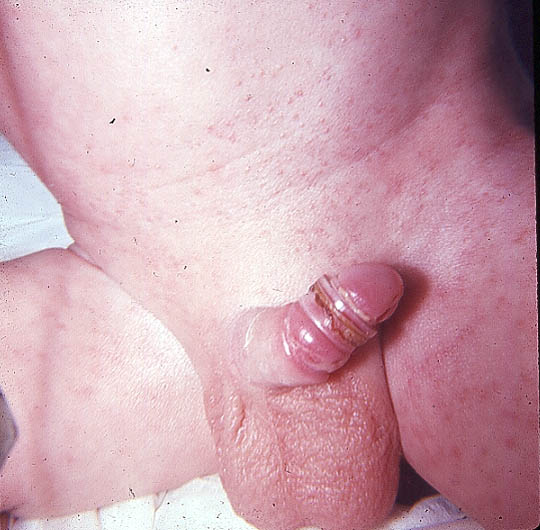 | 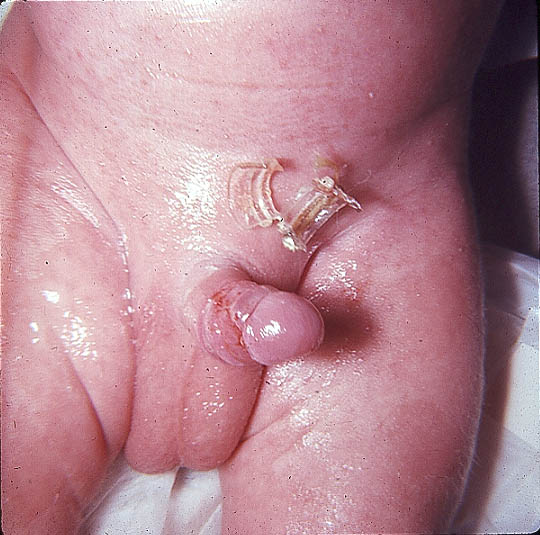 |
Retained Plastibell ring from the University of Florida Pediatrics
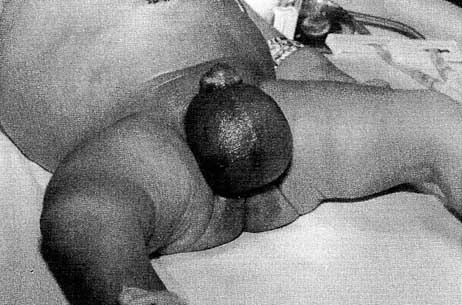 | 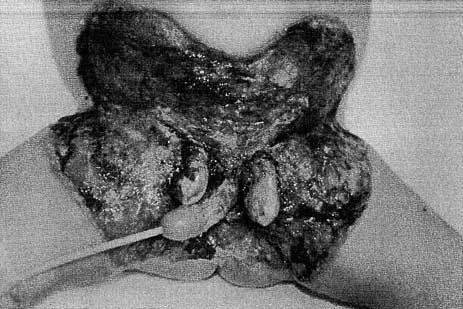 |
(Above) A term, 10-day-old infant was brought to the hospital for evaluation of tenderness and swelling involving his penis, scrotum, and lower abdomen 2 days after he had undergone Plastibell circumcision. He was diagnosed with Necrotizing Fasciitis. Read more about this story here.
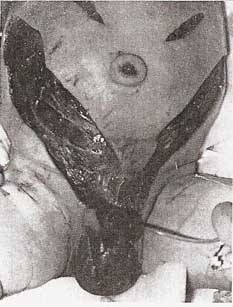 | 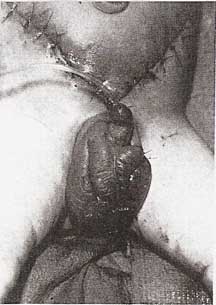 |
A 2.6-kg male infant was born by normal vaginal delivery after 39 weeks gestation. He was circumcised without incident by the Plastibell technique at age 3 days. Two days later, his mother noticed slight penile swelling and a small amount of blood and pus on the diapers. Later in the day, the penis and scrotum turned black-purple in color. The Plastibell was removed at another hospital and he was transferred to our institution. Read more about this story here.
MEDICAL JOURNAL: Twenty-three injuries resulting from circumcision with the Plastibell device all occurred from prolonged retention of the ring. In each case, the ring was retained and had migrated proximally. There was extensive skin loss in 17 (74%) babies. Urethrocutaneous fistulae were the result in nine (39%) of these cases, while partial necrosis of the glans penis occurred in four (17%).
http://www.ncbi.nlm.nih.gov/pubmed/19570722
http://www.ncbi.nlm.nih.gov/pubmed/19570722
As you can see, the Plastibell procedure is not painless. It's not safer than other circumcision methods. It's not without its own unique set of risks and complications. All methods of circumcision have risks. All methods of circumcision remove a normal, healthy part of the male genitalia. To learn more about circumcision, please click here.


 RSS Feed